
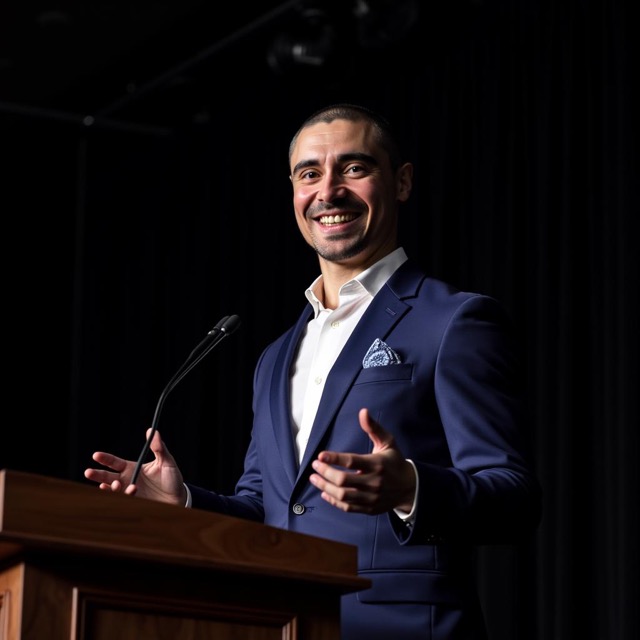
Mila AI Institute · McGill & Concordia

Berardino Barile PhD

Research Scientist | Machine Learning & AI | Computer Vision | Causal Inference

If you want to know more talk to my CV 😉

Berardino Barile
Scroll

01 / About

About me

I am a Senior Research Scientist with a double doctoral degree in Machine Learning and an M.Sc in Statistics. With a rich background spanning both the public and private sectors, I have served as a Consultant and Senior Research Scientist, contributing to a diverse range of projects. My expertise is evidenced by a multitude of peer-reviewed journal publications. Currently, I am deeply engaged in research areas such as ML for Computer Vision, Generative AI, Causal Inference, Causal ML and Statistical Methods. I am driven by a perpetual curiosity, always seeking new opportunities to expand my knowledge and skills.

Italian native · English advanced · French advanced · Spanish beginner

2 Doctoral degrees
8 Scientific contributions
5 Professional roles
4 Countries

02 / Education

Education

  1. Master's Degree in Statistics

    La Sapienza University of Rome (2011-2013)

    Thesis: Short and Long Structural Effects of the International Bank System: A Structural-VAR Approach

    Grade: 110/110 with honors

  2. Bachelor's Degree in Statistics

    La Sapienza University of Rome (2008-2011)

    Thesis: Purchase Power Parity (PPP) and Equilibrium Exchange Rate in the Financial Market

    Grade: 110/110 with honors

03 / Experience

Professional Experience

  1. Lead AI Engineer - Fastweb S.p.A., Rome (Apr 2025 - Present)

    • Leading LLM and agentic automation initiatives: design, build, and deploy large language model and multi-agent systems that automate complex, knowledge-intensive workflows end-to-end, taking solutions from research prototypes to production-grade services.
    • Vision-Language Model (VLM) Retrieval-Augmented Generation (RAG): develop and optimize multimodal RAG pipelines that jointly reason over visual and textual content for document intelligence, grounding model responses in enterprise knowledge bases to boost factual accuracy and reduce hallucinations.
    • Steering and fine-tuning of Large Language Models: apply activation steering, instruction tuning, and parameter-efficient fine-tuning (LoRA/PEFT) to align open- and closed-source LLMs with domain-specific requirements, improving reliability, safety, and downstream task performance.
    • Agentic voice assistant for task automation: engineer a real-time, voice-driven assistant on an OpenClaw-style agentic framework, orchestrating tool use, function calling, and speech-to-text / text-to-speech to autonomously execute end-to-end operational tasks.
  2. Research Scientist - McGill & Concordia University - Mila AI Institute, Montréal (Mar 2023 - Apr 2025)

    • Led AI research projects in Computer Vision: implemented the latest state-of-the-art computer vision models in collaboration with the Probabilistic Vision Group (McGill), IMPACT Lab (Concordia), and Mila AI Institute (Yoshua Bengio).
    • Leveraging novel generative AI methods (LLMs) and Causal ML: zero-shot prediction and causal reasoning in the context of longitudinal disease evolution. Exploited the embedding of tabular and image data to simulate counterfactual scenarios, aiding in the management of risks and side effects of new experimental drugs.
    • Teaching assistant at McGill University: taught probability theory, Bayesian inference and deep learning generative models focusing on the mathematical and probabilistic aspect under the supervision of Prof. Tal Arbel. Presented research at top-tier conferences (e.g. MICCAI, ICCV, NeurIPS, CVPR).
    • Research Consultant at University La Sapienza: provided expert guidance for developing advanced statistical and econometric models for analyzing credit risk and survival of small and medium Italian enterprises. Conducted analysis of balance sheets and financial statements to assess financial health, predict insolvency risks, and identify key economic factors influencing business longevity under the supervision of Prof. Angelo Castaldo.
  3. Senior Data Scientist - Verti S.p.A., Milan (Jul 2022 - Mar 2023)

    • Developed machine learning and statistical models: for optimal pricing, churn prediction, and customer retention, utilizing techniques such as regression analysis, gradient boosting, and neural networks. Developed production pipelines, achieving a measurable (+2%) increase in revenue and a (+5%) reduction in customer churn.
    • Built automated pipelines using AWS SageMaker: scalable model training, evaluation, and deployment, enabling seamless integration of ML workflows and reducing deployment time (-30%) for production-ready models.
    • Developed constrained optimization models for risk assessment and profitability: implemented linear programming and metaheuristic algorithms to determine optimal pricing strategies that balanced risk mitigation with profitability targets.
  4. Big Data Scientist - Isiway S.r.l., Rome (Nov 2017 - May 2019)

    • Implemented ML solutions for big data consulting projects: implemented deep learning models for predicting human trajectories. Analyzed customer behavior (e.g. mouse tracking) and recommendation systems (+20% retention) for enhanced customer experience.
    • Web Scraping and NLP for Sentiment Analysis: developed deep learning-based NLP methods to predict sentiment (positive or negative) from large-scale textual data extracted from web sources, utilizing techniques such as Word Embeddings, Recurrent Neural Networks (RNNs, LSTM) and Transformer for enhanced prediction accuracy (+25%).
  5. Data Analyst - Invitalia S.p.A., Rome (Apr 2014 - Nov 2017)

    • Analyzed economic and financial indicators: in-depth evaluation of the solidity and solvability of publicly listed companies for investment risk assessment and portfolio management strategies.
    • Developed advanced econometric models for public policy evaluation: implemented parametric and semi-parametric models for survival analysis of small and medium enterprises. Designed non-parametric methods for clustering and density estimation, and performed probabilistic matching to simulate counterfactual scenarios.

04 / Skills

Skills & Tools

  • Python
  • R
  • Stata
  • Matlab
  • SQL
  • LaTeX
  • Bash
  • Java
  • GitHub
  • PyTorch
  • TensorFlow
  • scikit-learn
  • NumPy
  • Pandas
  • SciPy
  • CUDA
  • AWS SageMaker
  • Docker
  • Linux
  • Bayesian Inference
  • Probabilistic Modeling
  • Causal Inference
  • Optimization
  • Deep Learning
  • Generative AI
  • Image Processing

Programming & Development:

  • Python
  • R
  • Stata
  • Matlab
  • SQL
  • LaTeX
  • Bash
  • Java
  • GitHub

Used for developing machine learning models, statistical analysis, and data processing in research and industry projects.

Machine Learning & AI:

  • PyTorch
  • TensorFlow
  • scikit-learn
  • NumPy
  • Pandas
  • SciPy
  • CUDA

Implemented deep learning models for computer vision, probabilistic modeling, and time-series forecasting.

Cloud & MLOps:

  • AWS SageMaker
  • Docker
  • Linux

Deployed ML pipelines for large-scale training, model serving, and workflow automation in cloud environments.

Mathematical & Statistical Methods:

  • Bayesian Inference
  • Probabilistic Modeling
  • Causal Inference
  • Optimization

Designed models for counterfactual analysis, risk evaluation, and decision-making in medical imaging and finance.

Computer Vision & AI:

  • Deep Learning
  • Generative AI
  • Image Processing

Developed generative models for medical imaging, trajectory prediction, and biomarker discovery.

05 / Research

Scientific Contributions

Institutions
2021

Data Augmentation Using Generative Adversarial Neural Networks (GANs) on Brain Structural Connectivity in Multiple Sclerosis.

Barile B, Marzullo A., Stamile C. et al. 2021, Computer Methods and Programs in Biomedicine, 206:106113

Read paper
2024

Probabilistic Temporal Prediction of Continuous Disease Trajectories and Treatment Effects Using Neural SDEs.

Barile B, Durso-Finley, Falet J.P. et al. 2024, MICCAI (Oct 2024 Conference)

Read paper
2025

ADOPT: Adversarial Optimization Strategy for Counterfactual Trajectories of Grey Matter Atrophy.

Barile B, Chen E., Sappey-Marinier D. 2025, IEEE Transaction in Biomedical Imaging (Under review)

Under review
2020

Tensor Factorization of Brain Structural Graph for Unsupervised Classification in Multiple Sclerosis.

Barile B, Marzullo A., Stamile C. et al. 2020, 25th International Conference on Pattern Recognition (ICPR), Milan (virtual), Italy, pp.5052-5059

Read paper
2021

Ensemble Learning for Multiple Sclerosis Disability Estimation Using Brain Structural Connectivity.

Barile B, Marzullo A., Stamile C. et al. 2021, Brain Connectivity, PMID: 34269618

Read paper
2024

Causal Impact Evaluation of Occupational Safety Policies on Firms’ Default Using ML Uplift Modelling.

Barile B, Forti M., Marrocco A., Castaldo A. 2024, Scientific Reports 14, 10380

Read paper
2022

New Multiple Sclerosis Lesion Segmentation and Detection Using Pre-activation U-Net.

Ashtari P., Barile B, Van Huffel S. et al. 2022, Frontiers in Neuroscience, 16:975862

Read paper
2022

A Kernel Based Blind Source Separation Approach for Classification of Multiple Sclerosis Clinical Profiles.

Barile B, Ashtari P., Durand-Dubief F. et al. 2022, Proceedings of the 30th European Symposium on Artificial Neural Networks, Computational Intelligence and Machine Learning (ESANN 2022), Bruges, Belgium

Read paper